Keyring

Browser Extensions

Keyring in Chrome, Edge, Firefox, and Safari.

Download the extension for your browser, load it once, and sign in with the same Optanik account. After that it fills saved logins, asks to save new ones, and lets you look up or create entries from the toolbar.

How it works

Four things the extension does

Install it once. Sign in with the same Optanik account you already use for Keyring. After that it fills logins, offers to save new ones, and lets you look up or create entries from the toolbar.

1. Download

Pick Chrome, Edge, Firefox, or Safari and save the zip for that browser.

2. Install

Unzip the file, then load it as an unpacked extension. The steps below walk through each browser.

3. Sign in

Click the Keyring icon and use your Optanik email and password. MFA codes work from the same popup.

4. Use it

Fill a page, save after you log in, search the vault, or create a login by hand.

Download for your browser

Each button gives you a zip made for that browser. Chrome and Edge use the same Chromium package. Firefox and Safari have their own install steps.

Chrome

Works in Google Chrome on Windows, macOS, and Linux.

Download Chrome

Edge

Same package as Chrome. Load it from edge://extensions.

Download Edge

Firefox

Uses the Firefox add-on manifest. Load it from about:debugging.

Download Firefox

Safari

Safari 16+ on a Mac. Convert the zip once with Apple’s tool, then enable it.

Download Safari

Install in a few clicks

Download first, unzip the folder, then follow the picture for your browser. You only do this once on each computer.

Chrome and Edge

Load the unzipped folder

  1. Download the Chrome or Edge zip and unzip it. Leave the folder where you can find it.
  2. Open a new tab and go to chrome://extensions or edge://extensions.
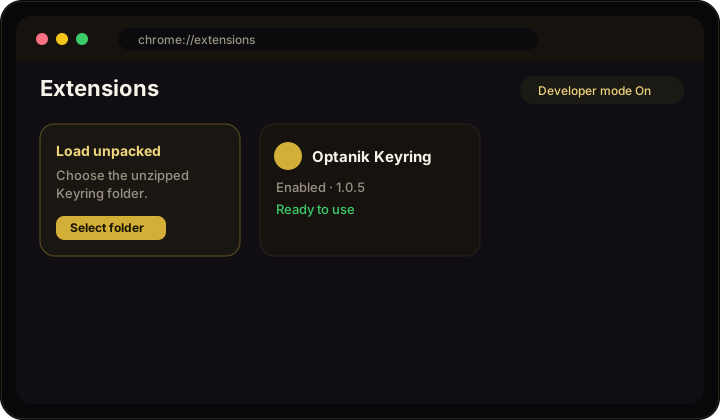
  3. Turn on Developer mode in the top-right corner.
  4. Click Load unpacked and choose the unzipped Keyring folder.
  5. Pin the Keyring icon so it stays next to the address bar.
Chrome extensions page with Developer mode on and Load unpacked highlighted next to the Optanik Keyring card.
Turn on Developer mode, then Load unpacked and pick the unzipped folder.

Firefox

Load a temporary add-on

  1. Download the Firefox zip and unzip it.
  2. Open about:debugging#/runtime/this-firefox.
  3. Click Load Temporary Add-on…
  4. Select manifest.json inside the unzipped folder.
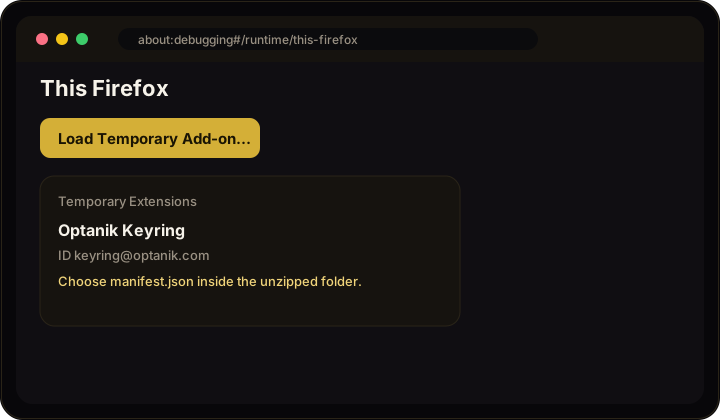
  5. Pin Keyring from the extensions menu. Temporary add-ons go away when Firefox restarts until the add-on is signed.
Firefox debugging page showing Load Temporary Add-on and the Optanik Keyring add-on.
Choose manifest.json from the unzipped Firefox folder.

Safari

Convert once, then enable

  1. Download the Safari zip on a Mac and unzip it. You need Safari 16 or later and Xcode.
  2. Open Terminal and run xcrun safari-web-extension-converter on that folder.
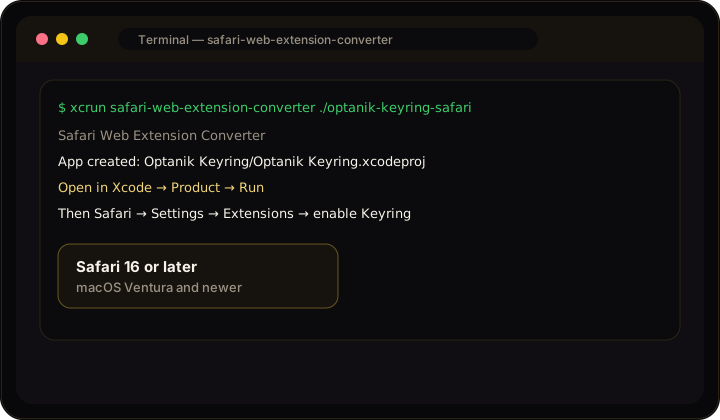
  3. Open the app Xcode creates, then choose Product → Run.
  4. In Safari open Settings → Extensions and turn on Optanik Keyring.
Terminal showing the Safari web extension converter creating an Xcode app for Keyring.
Apple wraps the WebExtension in an app. Run it once, then enable Keyring in Safari.

How to use Keyring in the browser

Everything happens from the gold Keyring icon and two small bars that appear on login pages. You do not need to keep the Keyring website open.

Sign in
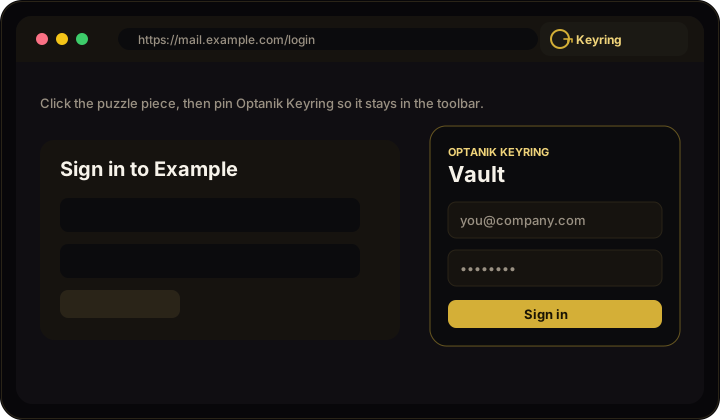
Open the popup and use your Optanik account

  1. Click the Keyring icon in the toolbar.
  2. Enter the same email and password you use on the Keyring site.
  3. If you use MFA, pick Authenticator, Email, or Telegram. For email or Telegram, tap Send code, then type the code.
Browser toolbar with the Keyring icon pinned, and the sign-in popup open.
Pin the icon, then sign in once. The extension talks to production Keyring automatically.

Fill

Fill a saved login on the page

  1. Open a website that has a username and password field.
  2. If Keyring has a match, a bar appears at the top: Fill Example Mail?
  3. Click Fill. The fields are filled for you. Click Not now to hide the bar.
Keyring extension bar asking to fill the Keyring login page, with Fill and Not now.
The fill bar only shows when Keyring already has a login for that site.

Save

Save after you sign in

  1. Type a login and password and submit the form as usual.
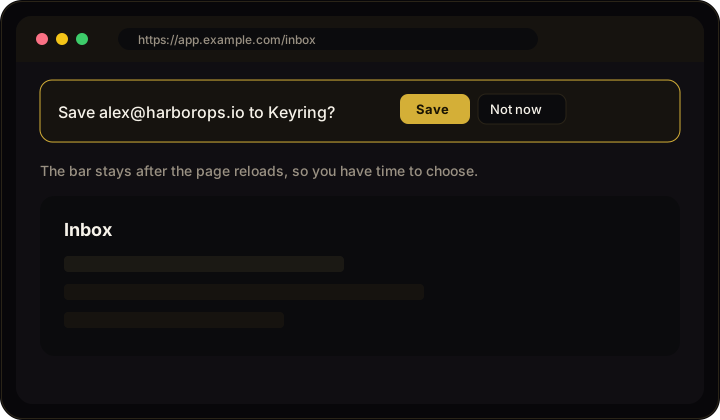
  2. A bar asks Save this login to Keyring? It stays after the page reloads so you have time to choose.
  3. Save stores it in the Browser folder. Not now dismisses it. Never for this site stops future prompts there.
Save-to-Keyring bar still visible after the website inbox has loaded.
The save prompt follows you onto the next page instead of disappearing during login.

Look up

Find, edit, fill, or delete from the popup

  1. Open the popup and stay on the Look up tab.
  2. Search by title, login, or website. Click a result to open it full screen.
  3. Use Fill, Edit, or Delete on the bottom row. Edit unlocks the fields and turns into Save. Close with the X.
Keyring extension popup with a login open full screen and Fill, Edit, and Delete on one row.
Search the vault without leaving the page you are on.

Generate

Build a strong password in the vault

  1. Open an entry and start editing, or create a new login.
  2. Use the password generator to pick length, letters, numbers, and symbols.
  3. Tap Use Password to drop it into the field, then save.
Keyring password generator showing a strong 20-character password with length, character options, and Use Password.
The same generator you see in the vault when you need a new password.

Create

Add a login by hand — and a folder if you need one

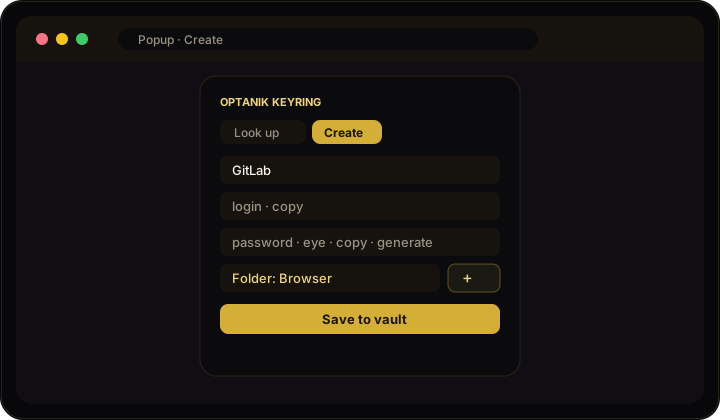
  1. Open the popup and switch to Create.
  2. Fill in title, login, password, and website. Use the eye to show the password, the copy icons to copy, or the dice to generate one.
  3. Pick a folder, or tap + to name a new folder and Add it. If you skip the folder, Keyring uses Browser.
Keyring create tab with login fields, password tools, and a new-folder control.
Manual entries land in Browser unless you choose or create another folder.